















Featured Topics
April 04, 2014
Experts on Rwanda to Mark the 20th Anniversary of the Rwandan Genocide
Twenty years on from the beginning of the Rwandan genocide, we feature experts, including survivors from the genocide, who can talk on its causes, atrocities, and aftermath, as well as Rwanda 20 years later.

Expert Spotlight
Jacqueline Murekatete
Genocide Prevention and Human Rights Activist
For interviews on the 20th anniversary of the Rwandan genocide.
Jacqueline Murekatete is an internationally recognized genocide prevention and human rights activist. Born in Rwanda in 1984, Jacqueline was nine years old when she lost her entire immediate and most of her extended family to the 1994 genocide in Rwanda. Jacqueline has addressed the UN General Assembly on the tenth year anniversary of the 1994 genocide in Rwanda, and regularly participates in high level human rights forums where she speaks about genocide prevention, gender based violence during genocide and mass atrocities, transitional justice and women’s role in post conflict rebuilding efforts. She has been featured in The New York Times, The Washington Post, Huffington Post, Jerusalem Post, UN Africa Renewal Magazine, Newsday, Fast Company, People, NPR, Voice of America, CNN, PBS, NBC, ABC, MTV, and other media outlets worldwide.
Areas of Expertise:
Africa, Gender-based violence, Human rights, Humanitarian, International, Law, Social justice, War
WMC SheSource
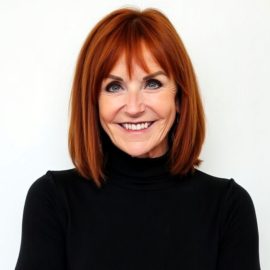
Featured Expert
Lauren C. Anderson
International Consultant, former FBI Executive
For interviews on the 20th anniversary of the Rwandan genocide.
Lauren Anderson, an internationally recognized Consultant and former FBI Executive, is a National Security and Crisis Management expert. As the first woman to lead the FBI’s office in the American Embassy in Paris, France, she directed the FBI’s engagement with, and operations in, 24 countries, 22 of which were in Africa. She worked with Department of Justice attorneys and the State Department to negotiate an unprecedented agreement between the United States and Rwanda to allow for the prosecution, in the US, of Rwandan citizens responsible for acts of terrorism against US and other citizens.
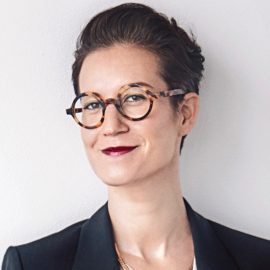
Featured Expert
Lauren Wolfe
Journalist
For interviews on the 20th anniversary of the Rwandan genocide.
Lauren Wolfe is an award-winning journalist who has written for publications from The Atlantic to The Guardian. She is the director of WMC’s Women Under Siege, a project on sexualized violence in conflict originated by Gloria Steinem at the Women’s Media Center. She serves on the advisory committee of the Nobel Women’s Initiative’s International Campaign to Stop Rape & Gender Violence in Conflict.

Featured Expert
Sarah (Holewinski) Yager
Washington Director
Human Rights Watch
For interviews on the 20th anniversary of the Rwandan genocide.
Sarah Holewinski is executive director of Center for Civilians in Conflict, leading the organization’s efforts to make warring parties more responsible for their actions to civilians before, during, and after armed conflict. Prior to joining the Center in 2006, Holewinski consulted for Human Rights Watch and the Clinton Foundation HIV-AIDS initiative in Rwanda. She is a frequent commentator on civilian protection issues in publications counting The New York Times, Foreign Affairs, Foreign Policy, and The Washington Post. She was also named in the top 100 Most Influential People in Armed Violence Reduction by Action on Armed Violence (AOAV).

Featured Expert
Shalini Nataraj
Vice President of Programs
Ing Foundation
For interviews on the 20th anniversary of the Rwandan genocide.
Shalini Nataraj is the Director of Advocacy and Partnerships at the Global Fund for Women. Nataraj is also a founder of the Alliance for Secularism and Democracy in South Asia and worked to promote human rights and democracy in Rwanda, Burundi and neighboring countries following the Rwandan genocide with human rights and policy advocacy groups in the region and the US. She has spoken extensively on issues of human rights, particularly on the need for a gendered approach to rights.

Featured Expert
Jessica Neuwirth
Director
ERA Coalition/Donor Direct Action
For interviews on the 20th anniversary of the Rwandan genocide.
Jessica Neuwirth is one of the founders and Honorary President of Equality Now. She has also worked in the United Nations Office of Legal Affairs and as Director of the New York Office of the High Commissioner for Human Rights. She served as a special consultant on sexual violence to the International Criminal Tribunal for Rwanda for the Akayesu and Musema judgments, and worked again for the ICTR on the Media judgment. As Special Advisor on Sexual Violence to the UN High Commissioner for Human Rights in 2010, she organized the UN high-level panel on reparations for victims of sexual violence in the Democratic Republic of Congo.

Featured Expert
Jacqueline Novogratz
Chief Executive Officer
The Acumen Fund
For interviews on the 20th anniversary of the Rwandan genocide.
Jacqueline Novogratz is the founder and CEO of Acumen Fund, a non-profit global venture fund that uses entrepreneurial approaches to solve the problems of global poverty. Acumen Fund currently manages more than $30 million in investments in South Asia and Eastern/Southern Africa, all focused on delivering affordable healthcare, water, housing and energy to the poor. Prior to Acumen Fund, Jacqueline founded Duterimbere, a micro-finance institution in Rwanda.

Featured Expert
Hadar Harris
Executive Director
Northern California Innocence Project (NCIP) at Santa Clara University School of Law
For interviews on the 20th anniversary of the Rwandan genocide.
Hadar Harris is the Executive Director of the Center for Human Rights and Humanitarian Law at American University Washington College of Law. She is an international human rights attorney and specializes in issues of civil and political rights, gender equality, prevention and punishment of genocide, and domestic implementation of international norms.

Featured Expert
Helena Cobban
Contributing Editor
Boston Review
For interviews on the 20th anniversary of the Rwandan genocide.
Helena Cobban is a veteran writer, researcher, and program organizer on global affairs. She is author of Amnesty after Atrocity?: Healing Nations after Genocide and War Crimes and The Moral Architecture of World Peace: Nobel Laureates Discuss our Global Future. Ms. Cobban has published widely in print media on three continents and has considerable experience in broadcast media as a reporter for ABC News and the BBC in the 1970s and as a guest on many leading radio and broadcast discussion shows in the U.S. She speaks French and Arabic.

Featured Expert
Belinda Cooper
Adjunct professor
NYU Center for Global Affairs and Columbia University's Institute for the Study of Human Rights
For interviews on the 20th anniversary of the Rwandan genocide.
Belinda Cooper is a Senior Fellow at the World Policy Institute and an adjunct professor at New York University’s Center for Global Affairs. Cooper, an expert on human rights and international and transitional justice, is the editor of “War Crimes: The Legacy of Nuremberg,” which explores the interconnections between the Nuremberg tribunal and today’s international criminal courts. Her family background--she is the daughter of a Holocaust survivor--contributed to Cooper’s expertise in the areas of historical memory and “transitional justice,” including tribunals, truth commissions, and other methods of coming to terms with past violence or dictatorship.

Featured Expert
Consolee Nishimwe
Motivational Speaker & Author
For interviews on the 20th anniversary of the Rwandan genocide.
Consolee Nishimwe is an author and motivational speaker, and a survivor of the 1994 genocide against the Tutsi in Rwanda. She went through the horrors of genocide at the age of 14 when she and her family were forced to leave their home in Rubengera, Kibuye and go into hiding when the genocide started. Unfortunately, during the course of the 3 month long genocide, her father and three young brothers were murdered along with many other close relatives. Today, Consolee is a committed speaker about genocide and sexual violence and is an advocate for survivors like herself who suffered physical and emotional torture. In 2012, Consolee released her memoir Tested to the Limit: A Genocide Survivor’s Story of Pain, Resilience and Hope.

Featured Expert
Eugenie Mukeshimana
Founder & Executive Director
Genocide Survivors Support Network
For interviews on the 20th anniversary of the Rwandan genocide.
Eugenie Mukeshimana is the founder and executive director of the Genocide Survivors Support Network, a charitable organization with a mission to help genocide survivors rebuild their lives and to educate communities about the crime of genocide. She was a young adult and 8 months pregnant when the genocide broke in Rwanda in 1994. She is a frequent panelist and lecturer on genocide-related issues such as justice and forgiveness, gender-based violence, memorialization and preservation of history, trauma and grief management, education and advocacy.

Featured Expert
Elizabeth Dearborn-Hughes
CEO & Co-founder
Akilah Institute for Women
For interviews on the 20th anniversary of the Rwandan genocide.
Elizabeth Dearborn-Hughes is the CEO & Co-founder of the Akilah Institute for Women, a college with campuses in Rwanda and Burundi that connects young women to economic opportunity. Elizabeth moved to Rwanda in 2006 and co-founded the nonprofit Amani Africa to provide scholarships to street children, support an orphanage in Kigali, and organize reconciliation and conflict resolution conferences for genocide survivors. After working with business and civil society leaders to analyze the training needs of the Rwandan private sector, Elizabeth and her husband, Dave Hughes, founded Akilah in 2010 to provide market-relevant education and career development to promising young female leaders. Newsweek and The Daily Beast recognized Elizabeth as one of the 125 Women of Impact. Forbes has recognized Elizabeth as one of the World’s Most Influential Female Social Entrepreneurs.
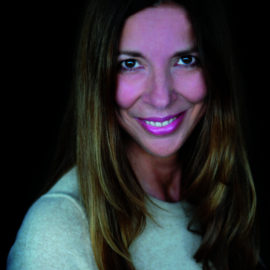
Featured Expert
Nathalie Blaquiere
Journalist and Author
Internews
For interviews on the 20th anniversary of the Rwandan genocide.
Nathalie Blaquiere has just completed a two-year term as Communications Specialist to the chief of the UN in Rwanda. Prior to that she was for four years the Country and Programme Director for Internews Rwanda, a media development NGO that has been active in Rwanda for a decade. In both these roles she has worked to build the capacity of the Rwandan media on a national scale. Nathalie contributed to the writing of Rwanda's media law during the national dialogues in 2009-2011 and has advocated with the Rwandan government on behalf of journalists in public and private fora.
Recent Expert Lists
October 12, 2026
Experts on the Cornell rape case
Recently Added Experts
 Dr. Jeanine N Gordon, DNP, RN, OCN, NE-BC
Registered Nurse
Memorial Sloan Kettering Cancer Center
Areas of Expertise: Cancer, Disability, Women's leadership
 Sharon Louden
Founder and Executive Director
Institute for Sustained Creativity
Areas of Expertise: Activism and advocacy, Arts and Culture, Feminism, Health, Women, Women's empowerment, Women's issues, Women's leadership
 Dr. Anita Manion
Associate Professor of Political Science
University of Missouri-St. Louis
Areas of Expertise: Education, Elections, Higher education, Politics, Women and Politics
 Dr. Maura Mills, Ph.D.
Professor
University of Alabama
Areas of Expertise: Business and the Economy, Caregiving, COVID-19, Criminal justice, Disability, Entrepreneurship, Feminism, Humanitarian, Intersectionality, Labor and Employment, Parenthood, Poverty, Relationships, Reproductive health and justice, Sexual harassment, Social justice, Trafficking, Women, Women in business, Women in STEM, Women's empowerment, Women's issues, Women's leadership, Work-life balance
 Dr. Sarah Elizabeth Bruhn
Lecturer
Boston University Wheelock College of Education and Human Development
Areas of Expertise: Caregiving, Education, Housing, Immigration, Parenthood, Women
Sign up for our Newsletter