















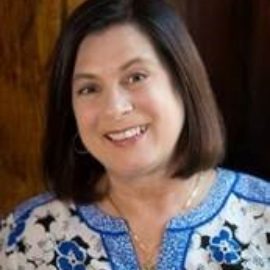
The government shutdown has entered its fourth week with Republicans and Democrats not yet coming to an agreement on an extension of the expiring Affordable Care Act tax credits. To discuss, we SPOTLIGHT Carole R. Myers. Myers, a professor in the College of Nursing at the University of Tennessee in Knoxville, coordinates interdisciplinary graduate health policy courses and a certificate program in health policy. Myers uses of policy, advocacy, and media to promote population health, focusing on healthcare access, rural health and healthcare disparities, Medicaid, and the value of Advanced Practice Registered Nurses. Myers frequently contributes to discussions on national health reform, the transformation of healthcare, full practice authority, and grassroots advocacy. Media includes: Knoxville News Sentinel, The Hill, i-24 News, WUOT-FM (Knoxville NPR affiliate).

Despite the ceasefire agreement, Israel launched strikes in Gaza claiming to be targeting "terrorists" prompting a visit by Vice President JD Vance. Hamas has denied involvement. To discuss, we FEATURE Lisa Schirch. Schirch is Richard G. Starmann chair in peace studies at the Kroc Institute for International Peace Studies, University of Notre Dame. A former Fulbright Fellow in East and West Africa, Schirch is the author of eleven books emphasizing local civil society agency and capacity, including Strategic Peacebuilding (2005), Ritual and Symbol in Peacebuilding (2006), Conflict Assessment and Peacebuilding Planning: Toward a Participatory Approach to Human Security (2014), The Ecology of Violent Extremism (2018), and Synergizing Nonviolent Action & Peacebuilding (2018). As a policy advisor, Schirch built the first peacebuilding policy initiative in Washington, DC, as the founding director of the Alliance for Peacebuilding's Policy Program. Schirch brought delegations of peacebuilding practitioners from Afghanistan, Iraq, and other countries to Congress and trained over 1000 US Foreign Service Officers and military officers on civil society peacebuilding and the relevance of the Geneva Conventions to civil-military relations in Iraq and Afghanistan. Media includes: The Washington Post, Huffington Post, CNN, NPR, Fox News.
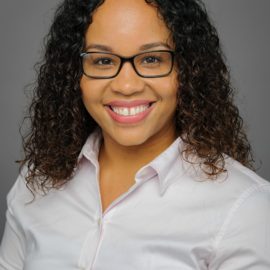
The murder trial for former sheriff deputy Sean Grayson began this week in Illinois. In July 2024, Grayson fatally shot Sonya Massey in her home after she had called to report a prowler. To discuss, we FEATURE Andrea M. Headley. Headley is an assistant professor at the McCourt School of Public Policy at Georgetown University. She is also an affiliate fellow at the Center for Innovations in Community Safety at Georgetown Law. Headley’s research focuses on policing to understand how organizational, managerial, and individual level factors affect service delivery and outcomes, with a keen focus on inequities and disparities. Specific examples of her past work include improving police-community relations in communities of color, assessing the effect of race during use of force encounters, evaluating body-worn cameras, understanding national police reform commissions, analyzing dispositional outcomes in citizen complaints, and exploring the gendered norms and cultures in policing. Media includes: Dayton Daily News, The Conversation, PBS, NBC.

Donald Trump has announced that he will enact tariffs and end U.S. aid to Colombia, escalating a feud that stems from U.S. strikes on boats from Colombia allegedly carrying drugs. To discuss, we FEATURE Shannon K. O'Neil. O'Neil is senior vice president, director of studies, and Maurice R. Greenberg chair at the Council on Foreign Relations (CFR), where she oversees the work of the more than six dozen fellows in the David Rockefeller Studies Program as well as CFR’s fourteen fellowship programs. She is a leading authority on global trade, supply chains, Mexico, and Latin America. O’Neil is the author of The Globalization Myth: Why Regions Matter, which chronicles the rise of three main global manufacturing and supply chain hubs and what they mean for U.S. economic competitiveness. O’Neil has lived and worked in Mexico and Argentina. She was a Fulbright scholar and a Justice, Welfare, and Economics fellow at Harvard University, and has taught Latin American politics at Columbia University. Media includes: The New York Times, Bloomberg, Univision, MSNBC, CNN, PBS, BBC.

Japanese parliament members have selected Sanae Takaichi to be the country’s first woman prime minister. To discuss, we FEATURE Yuki Tatsumi. Tatsumi is a senior director at the Institute for Indo-Pacific Security (IIPS). Previously, she served as a senior fellow and co-director of the East Asia Program and director of the Japan Program at the Stimson Center. Before joining Stimson, Tatsumi worked as a research associate at the Center for Strategic and International Studies (CSIS) and as the special assistant for political affairs at the Embassy of Japan in Washington. Tatsumi's is author of Opportunity out of Necessity: The Impact of U.S. Defense Budget Cuts on the U.S.-Japan Alliance, a co-author of Global Security Watch: Japan, and Japan's National Security Policy Infrastructure: Can Tokyo Meet Washington's Expectations?. She is also the editor of four earlier volumes of the Views from the Next Generation series: Peacebuilding and Japan, Japan as a Peace Enabler, Japan's Global Diplomacy, and Japan's Foreign Policy Challenges in East Asia. Media includes: The New York Times, Japan Times, Al Jazeera, Foreign Policy, PBS.

Following a week of deadly fighting, Afghanistan's Taliban government and Pakistan have reached a ceasefire agreement. To discuss, we FEATURE Samina Ahmed. Ahmed oversees the International Crisis Group’s work in Pakistan, Afghanistan, India and Nepal. Together with Crisis Group's analysts throughout the region, she prepares reports on the political, social, economic and military factors that increase the risks of extremism, internal conflict and war, and she makes policy recommendations to overcome these threats. In general, her team focuses on political, security and stability issues in South Asia, including problems of authoritarianism; Islamic extremism, domestic and regional terrorism; educational, judicial, and security sector reform; international involvement and intervention in the region, including US relations with authoritarian states; and domestic insurgencies and the risk of inter-state conflict. She also frequently briefs representatives of foreign ministries and international organisations, and is regularly involved in advocacy efforts internationally. Extensive media experience.

On Sunday, thieves robbed the Louvre and stole Napoleon's jewels from the museum. To discuss, we FEATURE Julia Hartmann. Hartmann is an art historian and independent curator who specializes in transnational Feminist and Activist Art. Hartmann finished her studies in art history and English linguistics and was previously curatorial assistant at the Secession and assistant curator at the 21er Haus/Belvedere in Vienna (Austria), where she assisted large scale exhibitions and managed the museum’s public program. She was also art critic for Frieze d/e in Berlin. Her curatorial work focuses on the intersection of social movements, digitization, and (feminist) art, which she elaborates within the exhibition series "Search for...", initiated in 2016 with the title "Search for...Serendipity. The more you search the less you find". Extensive media experience.
 Dr. Jeanine N Gordon, DNP, RN, OCN, NE-BC
 Sharon Louden
 Dr. Anita Manion
 Dr. Maura Mills, Ph.D.
 Dr. Sarah Elizabeth Bruhn