















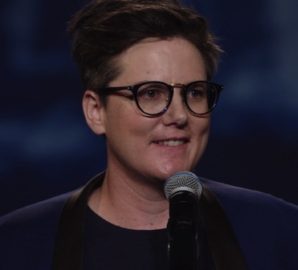
Women are taught that expressions of anger are unwelcome and unacceptable. Gadsby and Turner, each in her own way, are defying expectations.

A Japanese medical school has been lowering the scores of women taking its entrance exam to ensure that a greater proportion of men are admitted, Japanese media revealed on August 2.

The hashtag #PayBlackWomen trended this week as authors, nonprofit organizations, elected officials, and social media influencers joined forces to highlight the income inequality and high unemployment rates affecting African-American women.

The legislation, which focuses on prevention over punishment, offers the first legal definition of street harassment in the United States.

Former cricketer Imran Khan claimed victory Thursday in Pakistan’s parliamentary elections, raising concerns about how his leadership could impact women’s lives.

Brexit, it seems, has the potential to impact women’s lives—negatively. A report out this month warns that women’s rights may no longer be safeguarded once the UK leaves the European Union.

The administration's family separation policy has mobilized a new wave of volunteers, donors, and activists to reunify families and fight back.

A Minnesota Republican is coming under fire for misogynistic remarks he made on his former radio program.

A groundbreaking new report shows that the American public is deeply ignorant about Native Americans, and calls on media to improve its coverage.

In a ruling on Tuesday, the court of cassation in Rome determined that suspects cannot be prosecuted using aggravated circumstances if the victim voluntarily drank alcohol before the attack.

The House Appropriations Committee has passed an amendment that better enables taxpayer-funded adoption agencies to discriminate against queer and transgender families.

This summer, the question of sexualized violence at the running of the bulls has been front and center. On Friday, hundreds of Spaniards protested across the country, indicating a growing spirit of resistance against the assaults.


The Tour de France starts Saturday on the west coast island of Noirmoutier, but today about a dozen women gathered at the starting line to embark on their own 2000-mile journey.

In around 700 demonstrations across the country, people took to the streets on Saturday, June 30 to protest against President Trump's zero-tolerance immigration policy that separates immigrant children from their families. Below are photos taken by photojournalist Jenny Warburg during the Families Belong Together March in Washington, where an estimated 35,000 people gathered.

Denmark has passed a series of laws that that subjects certain families—namely, those who live in the heavily Muslim neighborhoods the government has classified as “ghettos”—to new rules and restrictions intended to compel “assimilation” into Danish society.

India is the most dangerous country in the world for women, according to a nee survey of experts. The results come amid a worsening climate of sexual and communal violence in India, including the January rape and murder of an 8-year-old Muslim girl.

Orrin Hatch’s Senate speech is the latest example of how conservatives appeal to our emotions to mask their longstanding political inaction.

Unlike recent coverage at the border, the vast majority of immigration reporting excludes women's issues and voices, a new study finds.

With Straight White Men, which opens next week, Lee will become first Asian American woman playwright on Broadway.
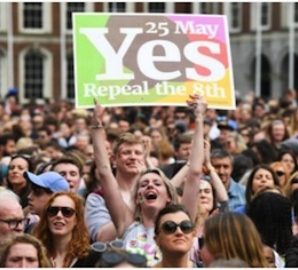
A leader in the campaign to repeal Ireland's abortion ban reflects on how the victory was won — and the implications for other countries.

Nigerian authorities have rescued 10 children allegedly being trafficked to Russia in what is believed to be an attempt to use the approaching World Cup as cover for the illegal activity.

Netflix's Unbreakable Kimmy Schmidt is just the latest in a long history of films and TV shows that have perpetuated stereotypes while failing to give opportunities to Native women.

Women won big in Tuesday’s primaries, securing party nominations in at least 56 races for federal and statewide executive offices. By the end of the night, the United States moved one step closer to electing the first indigenous woman to Congress and was poised to break the glass ceiling in a variety of other races across the country.

A new study finds little diversity on political news teams, but researchers are left with more questions.