
















White Americans must disavow, relinquish, dismantle, and divest from white supremacy at an individual and institutional level.

A presidential decree announced in Afghanistan at the end of March allowed for the release at least 10,000 prisoners over the age of 55 but there are still more than 100 women in a Kabul prison, now at great risk of becoming infected with coronavirus.

“On the Record” focuses on empowering Black women in the #MeToo movement.

A documentary airing today reveals that the plaintiff in the 1973 Supreme Court case Roe v. Wade, later revealed as Norma McCorvey, lied when she said she’d become pro-life in 1995.
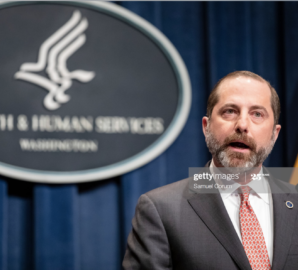
The Health and Human Services department is continuing plans to undo antidiscrimination provisions of the Affordable Care Act.

Countries like New Zealand, Germany, and Finland have had striking success in fighting the coronavirus. What do they have in common? For one, they all have women leaders.

Pandemic-related lockdowns disproportionally burden women. By asking the right questions, policymakers can create policies that alleviate that burden.

As men have increased their research while home these past couple months, women have lowered their submissions to academic journals, indicating that women are less able to do their research while in stuck in the house.

The many unnecessary barriers to abortion access in the U.S. have grown exponentially during the pandemic, forcing providers and patients to adapt.

Countries like Spain, France, the UK, Argentina, and Norway have devised schemes that allow women to seek help without alerting their partners.

More documentary films by and about women are getting awards recognition and finding sizeable audiences. Here is a list of docs, released over the last year, that are available for streaming.

The coronavirus pandemic has led to a massive surge in child abuse material being uploaded, according to a story from the Fuller Project for International Reporting co-published with the UK Telegraph.

The COVID-19 shutdown is wreaking havoc on child visitations and family reunification.

It’s taken nearly 100 years, but the Land O’Lakes company has finally removed the image of a kneeling Native American woman—nicknamed “Mia”—from its packaging.

The disparate impact of the coronavirus on Black women is revealing and deepening existing inequalities. Fighting it requires an intersectional approach.

In a country not known for its empowerment of women—or for its health system—five teenage girls are tackling Afghanistan’s coronavirus outbreak head-on.

Low-paid women workers have been devastated by the displacement cause by the pandemic. Advocacy groups are rallying to help them.

As the economy continued to tank amid the coronavirus pandemic, job losses rose to more than 700,000 in the month of March—and women were disproportionately affected.

Even with a zillion variations of “lockdown” and other measures being taken around the world to contain the spread of coronavirus, Panama has managed to find its own unique way of doing things.

Advocates are sounding the alarm about the risks of the new coronavirus spreading inside correctional facilities.

A number of conservative U.S. governors are using coronavirus as an excuse to shut down all abortion services in their states, calling them “non-essential” procedures.

In Australia, a government-supported initiative that provides “safe phones” to women stuck in violent homes is seeing a serious uptick in requests attributed to the virus, the Thomson Reuters Foundation reported Wednesday.

These recent works by Black women historians challenge conventional narratives of the history of the United States.

While necessary to combat the spread of COVID-19, sheltering in place has been shown to exacerbate domestic violence.

Stories about something that is “still” happening don’t get many eyeballs. But there is no way around what is still happening to Syrian women and girls as the conflict enters its 10th year, and the United Nations is sounding the alarm.