
















How can we translate Asian women’s leadership in their respective countries to the international stage?

The voracious-but-still-skinny-woman trope of a character rails against unrealistic body standards and eats tons of high-calorie foods, but somehow weighs very little herself.
When I first began educating myself about feminism, I was warned that I would soon start seeing sexism and misogyny all around me. Those who warned me were right.

In contrast to the hypersexualized attire donned by the majority of female characters in fantasy/action movies, Ruth E. Carter’s designs are "feminine, masculine, beautiful, and strong," and challenge the conception that femininity and strength are mutually exclusive.

It's important for desginers' clothes to be seen, but it’s just as important for those who wear clothes to feel seen by designers. And currently, many aren’t: specifically, individuals with disabilities. One brand might change that.
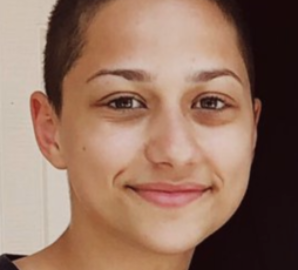
In light of women’s history month, it’s important to recognize and reflect on the successes of powerful young women. Indeed, much can be learned from how young female activists are using their voices to change the world.

Growing up, women are taught how to flirt with men and make ourselves appear softer, smaller, and nonthreatening. We are generally not taught about work and money.

Finding more accurate representations of my identity was so important not just because I saw myself in them, therefore, but because I felt connected to a wider community.

I have not yet come out to my family, and I began to wonder why I had to at all. Why is my identity one that has to be defined as “other” by our society?

Like so many other scientific concepts, there is mnemonic device for the modern stellar spectral classification scheme, also known as the Harvard Spectral Classification Scheme.


“There’s beauty in everything and everyone, and that shouldn’t be decided by the media or anyone,” Dayna Altman — a 24-year-old eating disorder survivor, graduate student, and mental health activist from the National Eating Disorder Association (NEDA) — told me in a recent interview.