
















Emerging feminist media platforms are helping South Asian people engage in, navigate, and mobilize feminist movements.

Us not only imparts an eerie warning about the repercussions of idly living a life of privilege as people suffer beneath you, but takes the warning a step further by showing what can happen when the “outsiders” the privileged are so afraid of letting in, the people who have been pushed below and ignored, finally force their way in — and do so with a vengeance.
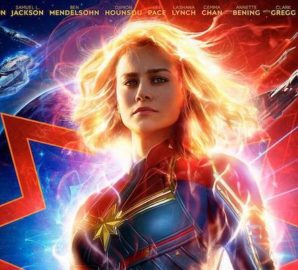
Can a superhero movie like Captain Marvel teach us anything about the “misinformation age” in which we currently live?

Even before the media gave these women’s political visions a chance, it has largely narrowed in on evaluating whether these women possess a single quality — one that they seem to care about only when it comes to female candidates: their likability.
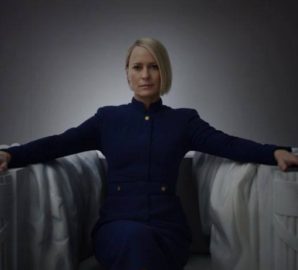
In the sixth and final season of House of Cards, President Claire Underwood has an opportunity to transcend Frank’s murderous scheming and set a more uplifting example, but instead forcefully pushes back against obstacles in her way and continues to fight for power at any expense.

It was only a matter of time before the echoes of Hollywood’s #MeToo and #TimesUp movements reached Bollywood, India’s film industry. That watershed moment finally arrived this September, when Indian actress Tanushree Dutta made accusations of harassment against industry veteran Nana Patekar
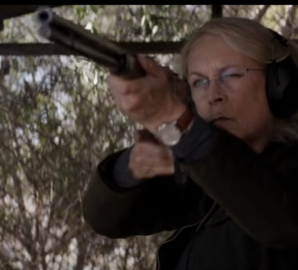
Bucking the trend of male heroism, many slasher films have opted for “the Final Girl”: protagonists who are victims of murderous circumstances — who weren’t looking to fight for their lives but rather had the fight thrust upon them — but who survive nonetheless.
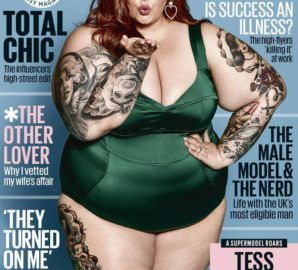
The recent backlash to Holliday’s magazine cover proves that we still need to do more to make our society’s beauty standards more inclusive.

In light of the Women's Media Center's brand new report evaluating the impact of #MeToo, Ashley Judd — Chair of the WMC Speech Project and one of the instigators of the #MeToo movement — spoke to Women Under Siege's Lauren Wolfe about her role in the movement, what #MeToo has accomplished, and what it will still accomplish in the future.

This year is the 20th anniversary of the widely beloved romantic comedy Practical Magic, a film that argues sorority is the most powerful magic available to women specifically because of its ability to uniquely support and instill confidence in each other.

Mona Haydar is a Syrian-American rapper and singer-songwriter who uses her powerful voice to call for justice.

As someone with an eating disorder, I knew Insatiable’s fat jokes and jokes about eating disorders would trigger me. What I was unprepared for, however, were the many biphobic jokes that were also a major part of the show’s storyline.

Popular but vicious characters like Regina George in Mean Girls, the spoiled but well-meaning protagonist Cher Horowitz in Clueless, and ambitious, cunning Blair Waldorf (Queen B of the Upper East Side) in Gossip Girl are all as beautiful, wealthy, self-centered, and ambitious as they come. There’s also another trait they all share, however, a trait that seems to be a key element of the “popular girl” trope: signs of have an eating disorder.

As season 3 of the “Nancy” podcast from WNYC Studios comes to a close, co-hosts Kathy Tu and Tobin Low took some time to tell the FBomb about their show, their lives, and which Queer Eye character they would be.

The Scarlett Johansson incident was hardly the first time a cisgender actor was criticized for taking a role many believe should have gone to a trans actor. In fact, a pattern of cisgender actors being cast as, and then inevitably critically acclaimed and rewarded for playing, transgender characters has emerged over the past few years.
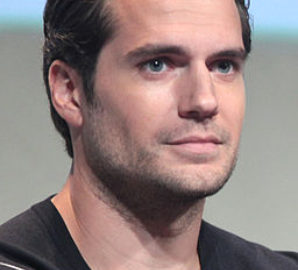
Neither the #MeToo movement, nor the basic acknowledgment of a woman’s agency, decrees the death of romance. The refusal to let go of traditional courtship, however, illustrates not just Cavill’s, but many straight men’s, inability to accept the possibility, let alone reality, of a shift in the balance of power between men and women and their equation of that shift in balance with the “death” of dating.

On the surface, the Netflix hit GLOW is a show about the making of a show — specifically, the 1980s TV show “Gorgeous Ladies of Wrestling” (G.L.O.W.) that inspired the series. But beneath this plot lies a far more interesting exploration of women’s experiences in the entertainment industry, and in the world at large, in the 1980s through a modern lens.

Closure is one thing, but concocting an entire series based on the constant reminder — and, in the aforementioned case, physical destruction — of one’s past partner directly places this past relationship, and inherent to that, her past partner, as the cornerstone of Becca’s journey to find love is disempowering to Becca as a multidimensional person.

As a kid, I did not understand queerness, although I undoubtedly embodied it in many ways. I wish I’d had an educational resource to help me understand and feel comfortable about my queerness much earlier in my life. So I made one. Queer Kid Stuff is an LGBTQ+ educational YouTube series for kids ages 3+ (but really, it’s for all ages).

Even though women have been speaking out about their experiences with online harassment for years, there is still so much we don’t understand about how harassment truly permeates and shapes the lives of its victims. Filmmaker Cynthia Lowen decided to explore this phenomenon in the new documentary “Netizens.”

When we talk about increasing and diversifying female representation in Hollywood, it seems it is women who feel the most pressure, who feel the most responsible, to counterbalance this misrepresentation by giving voices to a wide range of characters of different colors, ages, sexualities, and backgrounds.

Monáe’s new album navigates the myriad emotions involved in being socially deviant and outcast for that deviance.

Gabby Antonio Smashes the Imperialist, White Supremacist, Capitalist Patriarchy! is a web series that challenges systems of oppression in both its production and its content.
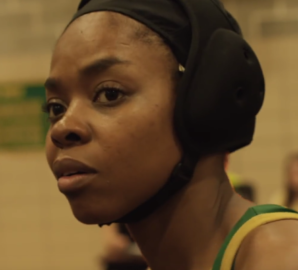
First Match (2018), the first feature film by writer-director Olivia Newman, tells the story of Monique a girl who competes on an all-boys wrestling team while simultaneously juggling the foster care system, school, and getting back in touch with her absent father.
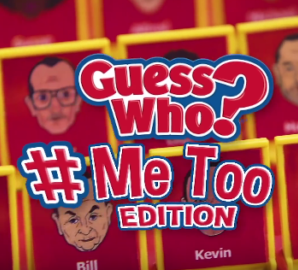
Sexual harassment is no laughing matter, but a recent Funny or Die sketch has managed to add some humor (dark though it may be) to the plague of sexual misconduct that spawned the #MeToo movement.