
















It is vital to know how your personal information is being absorbed and used by others.

The Tour de France is the most highly anticipated, popular cycling event worldwide.

On July 28, the greatest gymnast in history, Simone Biles, withdrew from the Tokyo Olympics

The new documentary, Pray Away, offers surprising and nuanced insights.

Women who participated in anti-CAA protests nearly two years ago continue to be targeted by law enforcement, bearing the full brunt of the security apparatus or facing aggressive intimidation.
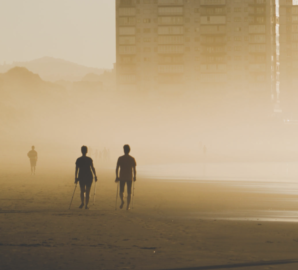
As someone who just decamped from New York City to the Pacific Northwest, you could probably call me a climate refugee.
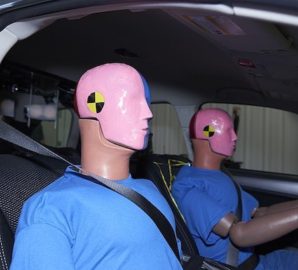
Learning how to drive is already a daunting task, but it can become even more so when you learn about how cars’ safety is determined

Amid a state of emergency around femicide in Puerto Rico, journalists and activists are challenging the normalization of sexist news coverage
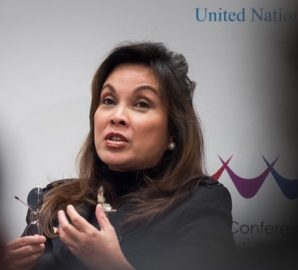
Activists whose work incorporates ecological, health, and equality campaigns have moved from protesting outside the halls of power to become elected legislators writing and passing the environmental protection frameworks that they campaigned for.

Inequality is especially worth thinking about in the summer, since it’s exacerbated in many ways during this season.

The movement had, and still has, a gaping blindspot: the influence of Scientology.

Even though she has taken on seemingly impossible tasks, for the first woman U.S. vice president, action beats inaction.

New York City is in the middle of an air-quality alert because of the massive wildfires out West and in Canada. Of course, what we’re experiencing here is nothing next to what those in the direct areas of the fires are feeling. But it’s not insignificant if you’re elderly, pregnant, have existing health issues, or are a child.

Samira Surfs draws on real-life stories to create the story of Samira, a 12-year-old girl who embraces surfing as a way to find herself and process her trauma.

Republicans have truth-telling teachers in their crosshairs as part of a renewed campaign to whitewash U.S. history

The FBomb recently had the chance to chat with Ramakrishnan about Never Have I Ever’s second season (which is currently streaming on Netflix) and more.
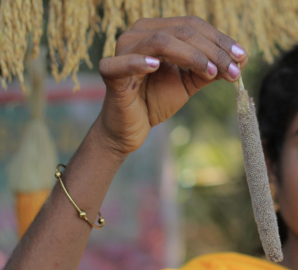
After Kandakam Mogulamma’s husband, a farmer, passed away in 2019, she quickly learned how to grow crops.
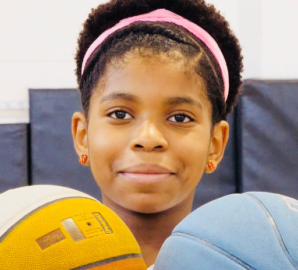
14-year-old Zaila Avant-garde became the first Black American to win the Scripps National Spelling Bee in the competition’s 96-year history.

Demands to address gender-based violence have escalated after a social media movement and a brutal murder.

All of these cases elicit a similar feeling of Black women being treated cruelly and unfairly based on arbitrary rules.

It wasn’t until recently that I realized I have never seen the interests of young boys, such as video games or sports, treated in the same way that girls’ interests in makeup, music, or even women’s sports often are.

Some of the challenges can actually hurt their participants because they lead people to do risky things like taking medicine, playing with electricity, or gluing body parts together using super glues.

Pandemic lockdowns led to worsening levels of depression, anxiety, and post-traumatic stress disorder among adolescents.

Dahabo Mahdi, 32, is ploughing a small cornfield she shares with her in-laws in Jiro, a village in central Somalia. She only moved there recently. She was forced to.

The title character in Jenny Mei Is Sad is a little girl who is often sad but still makes jokes and smiles. Her best friend always lets her know that she is there to listen and play games, even when Jenny Mei isn’t at her best.
- All Categories
- Arts and culture
- Body image and body standards
- Disability
- Economy
- Education
- Environment
- Feminism
- Free Speech
- Gender-based violence
- Girls
- Gloria Steinem
- Health
- Immigration
- International
- Jane Fonda
- LGBTQIA
- Media
- Misogyny
- Online harassment
- Politics
- Race/Ethnicity
- Religion
- Robin Morgan
- Science and tech
- Sports
- Violence against women
- WMC Loreen Arbus Journalism Program