
















Making women feel bad about their bodies and looks is good business for Facebook and Instagram, according to a former Facebook employee.

Growing up, Henley and her sister Zan received international attention as children because they were the only set of twins known to have survived being born with Crouzon syndrome, a rare condition that causes the facial bones to fuse prematurely.
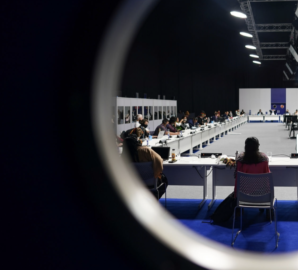
Many people from developing countries did not make it to the U.K. because of inequality — the ubiquitous kind of inequality that leaves poor people behind when it comes to the climate crisis, health outcomes, and pretty much anything else you can think of.


This year, the Guttmacher Institute published a mid-year report that found this was “the worst legislative year ever for U.S. abortion rights,” with 90 restrictions enacted in the 2021 legislative session.

After the recent high-profile murders of Sarah Everard and Sabina Nessa, there is a growing push in the U.K. to make misogyny a hate crime.
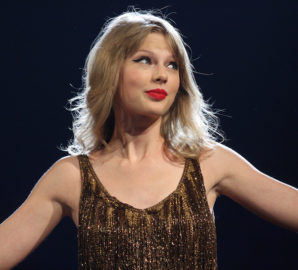
While Swift’s fight to own her intellectual property is setting a new standard for women in the music industry, the resurfacing of the “old” Taylor Swift also reminds us that there are still fundamental issues regarding women’s value in the entertainment industry.

Released earlier this week, We Light Up The Sky tells the stories of three Latinx teens from very different families who suddenly come together after a mysterious alien life form known as The Visitor begins causing a path of destruction through their neighborhood.

Biden has proposed $45 billion to replace lead water pipes throughout the country, a move that could begin to remedy decades of neglect of clean water in the U.S.
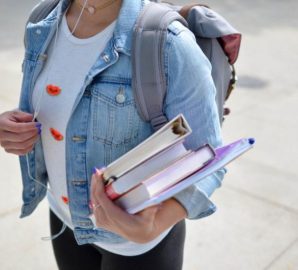
Having been criticized throughout my adolescence for using it, I’ve done my fair share of research about what the word “like” means.
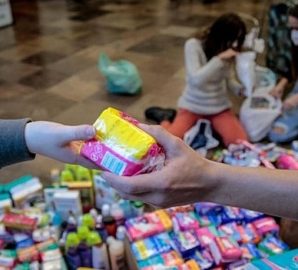
The only positive aspect of these events is that an issue that had previously been little debated now has national visibility and is being taken seriously by many politicians.
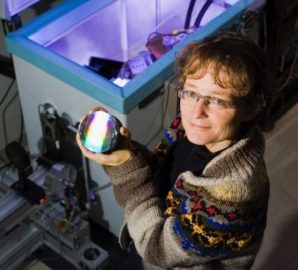
The work of people not in the political spotlight will be the critical element upon which global deciders will adopt measures that may save the future of our planet.
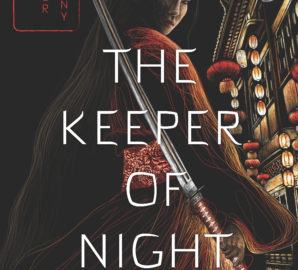
The Keeper of Night tells the story of Ren Scarborough, a half British Reaper and half Japanese Shinigami who always feels as if she must find a delicate balance between the two parts of her identity.
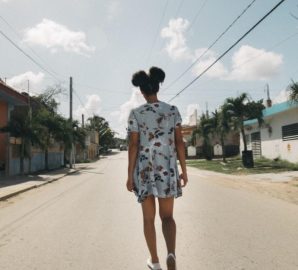
The disturbing and pervasive truth is that Black girls haven’t been afforded childhood during the pandemic, but that had also been true well before COVID-19.

Papillon’s debut novel, An Ordinary Wonder tells the story of a pair of twins named Otolorin and Wuraola as they come of age. But Oto has a deeply held secret — she was born intersex and has always been told she must never tell anyone the truth about her identity.

Culture and attitude must shift to a place where cis and trans Black women and girls always feel safe, where we are given credit for our immeasurable contributions and we are valued for who we are.
The silencing of women online goes beyond trolling.
Robin explores rising campaigns in the US and abroad to ban books and censor reporters, and revisits crusading Filipina journalist Maria Ressa, who was a prophetic special guest on the podcast in May 2018, and who has now just won the Nobel Prize.

We talk a lot about carbon dioxide when we talk about climate change. But, in reality, methane is a much more active contributor to global warming. While less ubiquitous in the atmosphere, methane is more effective at trapping radiation.

That experience opened my eyes to how vulnerable young women are in so many situations.

The artist, perhaps best known for The Dinner Party, is being recognized with the first comprehensive retrospective of her decades-long career, at San Francisco’s de Young Museum.
At 9 years old, I should not have been concerned with whittling down the space I took up just so I could blend in with the beige expectations of my classmates. But external and internal pressures had succeeded in convincing me otherwise.
- All Categories
- Arts and culture
- Body image and body standards
- Disability
- Economy
- Education
- Environment
- Feminism
- Free Speech
- Gender-based violence
- Girls
- Gloria Steinem
- Health
- Immigration
- International
- Jane Fonda
- LGBTQIA
- Media
- Misogyny
- Online harassment
- Politics
- Race/Ethnicity
- Religion
- Robin Morgan
- Science and tech
- Sports
- Violence against women
- WMC Loreen Arbus Journalism Program