As absurd or 1950s as it sounds, women across various work sectors in Japan are being told to take off their glasses.

Amid ongoing violent demonstrations against the re-election of Bolivian President Evo Morales, masked protesters on Wednesday kidnapped the mayor of a small town in central Bolivia.

With the election of a Democratic plurality on Tuesday, Virginia is poised to become the 38th—and final—state to ratify the ERA and make it a reality.


As states move toward ever-more-restrictive abortion regulations, Missouri has really gone over the edge. At a hearing on Tuesday, the state’s health director told lawmakers that he had been tracking the periods of women who’d been to the state’s only Planned Parenthood clinic, in St. Louis.

In a country as staunchly anti-abortion as Argentina, Sunday’s presidential election outcome signals a potential sea change for women’s rights in the notoriously restrictive country.

This is the first time a mastermind of mass rape has been held legally responsible in DRC. But the story doesn’t end here. There are still a few major issues to watch.

Today a historic conviction came down in the Democratic Republic of Congo. It was the first time an official or commander has been convicted of masterminding rape in the country.

It is 9 a.m. on November 9, and hundreds—maybe 1,000—people have gathered to watch something many believed would never happen: the trial of a group of men who allegedly gang-raped approximately 50 little girls, aged 18 months to 11 years, in a village called Kavumu. Justice has been four years in the making.

U.S. Ambassador to the UN Nikki Haley is going to Africa. South Sudan, the Democratic Republic of Congo, and Ethiopia, specifically. She says in an October 22 CNN op-ed that President Trump is sending her “to get a first-hand picture of what can be done.”

As the Caribbean and Florida have been pummeled by Hurricane Irma these past few days, people around the world have been desperate for news of their loved ones, while those stuck on battered islands and coasts with no electricity, no information on rescue activities, and little hope that their lives and property will make it through this A-bomb-level storm are left trying to find cell phones that work to learn what they can.

No, Donald Trump is not Adolph Hitler.
That this horrific idea exists, floating in our collective ethos and demanding a refutation is shocking. But this is where we are, and the failure to address the horror only means a greater evil is sure to come.

In November 2016, a scholar named Sebastian Schutte—a Marie Curie fellow at the Zukunftskolleg and the Department of Politics and Public Administration at the University of Konstanz in Germany—wrote an interesting article in The Washington Post. In it he argued that Trump had not reached Hitlerian heights. Not yet.
With this morning’s news that the Islamic State has claimed responsibility for the suicide bombing at the UK’s Manchester Arena Monday night, the obviousness of the target begins to make a sick kind of sense.

This is meant as an informal guide for journalists who cover sexualized violence or want to, mainly in an international context.
With Tuesday’s gruesome chemical attack in Syria all over the news, attention has suddenly turned toward the crimes of Bashar Al-Assad’s regime—and away, for a moment, from those of the Islamic State. It is about time.
In the Trump administration’s proposed mass slaying of any and all programs the United States financially supports in terms of human rights, one in particular is troubling for women around the world—and it’s an angle media have missed in their reporting.

“No hate! No fear! Refugees are welcome here!” Shouts are rising into the night sky in Brooklyn as I write this. I just left the Brooklyn federal courthouse, where hundreds of people are chanting that and more, some slogans more angry and profane than others.

Wars fought because of ethnic hatred often seem to be more brutal than others. This is just a personal observation, having studied many. Just look at Rwanda, whose 1994 war saw between 250,000 and half a million women raped, often with objects and often publicly, in order to spread maximum humiliation and terror.
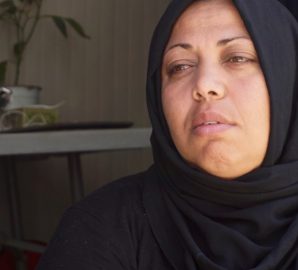
The air is stuffy by default. Soap, especially laundry soap, is usually a rare commodity among refugees. Add to the muddle of unwashed smells a buzzing from black flies, nearly 100 degree heat, and dark, polyester clothes that cover from head to toe, and life inside a makeshift container on the Greek island of Samos is an unpleasant one, thick with defeat.

Tucked away in the graffitied center of Athens is a soothing example of 1920s architecture. High ceilings and arched doorways lead to a stone-walled patio. The feeling inside is fresh on a sweaty day in Greece, with a breeze winding through tall, paneled windows. But it is the life inside, the laughter and chatter, that makes this a truly calming place.
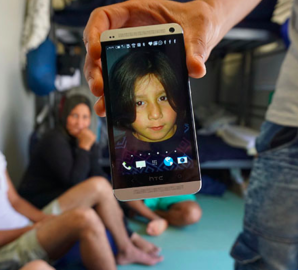
Here was yet another family flung across the sea from Syria sitting in an air-conditioned, yet still stuffy, container that is their temporary home on the island of Samos in Greece. With so many of them having made it to the country together, the Al-Ghateb family stood out from the hundreds of single men and mothers with children at the camp.

When the Democratic Republic of Congo was dubbed the “rape capital of the world” in 2010 by Margot Wallström, the former UN special representative on sexual violence in conflict, understandably the government of DRC was not happy. Besides that, putting one country above all others when it comes to violence against women is a debatable move: So many places have horrifying records of rape and impunity for such cases. But Wallström had good reason for aiming her words at what is unambiguously a truly terrible place for women.