
















Zimbabwe's maternal mortality crisis is pushing the debate on abortion, but the current economic crisis and stigma stand in the way of legalization.

Two years after the Hogar Virgen de la Asunción orphanage fire in Guatemala, which killed 41 teenaged girls, the truth is still coming to light, and it's far more sinister with every detail.

When a group of schoolgirls from northeast Nigeria met trafficked women who were struggling to survive after returning home, they knew they had to do something. Now they raise funds to help those women launch their own businesses and rebuild their lives.

They are the hidden cost of Rodrigo Duterte’s drug war in the Philippines: single, teenage mothers whose partners have been killed by police or vigilantes. And without a job or government support, it’s near impossible for them to support their children.

For many refugee children, especially girls, paying for and staying in school is a challenge. This program in a Ugandan refugee camp is working to change that.

When the women of Rwandit village learned how much initiation ceremonies for girls and boys were really costing them—in terms of money and lost education – they radically reformed their traditions, giving women and girls more power in the process.

Niñas sin Miedo, or Girls Without Fear, works to promote human rights by educating young girls on sexualized violence and offering conferences and workshops on teen pregnancy prevention, sexual abuse, and harassment. It also empowers the girls by teaching them to ride bikes together.

This is the first time a mastermind of mass rape has been held legally responsible in DRC. But the story doesn’t end here. There are still a few major issues to watch.

A call comes in at 4:58 p.m. The night shift hasn’t yet started, so the day team that has been working since 7 in the morning goes out. We leave at 5:30. There’s no explicit rush. The 11-year-old isn’t bleeding.

It is 9 a.m. on November 9, and hundreds—maybe 1,000—people have gathered to watch something many believed would never happen: the trial of a group of men who allegedly gang-raped approximately 50 little girls, aged 18 months to 11 years, in a village called Kavumu. Justice has been four years in the making.

Over the summer, researchers published a study that offered proof of a phenomenon in American black communities that has existed since slavery: By being perceived as more mature, black girls fall victim to what researchers are calling a “perception trap,” and are treated negatively as a result.

The week after she handed in her AK47 rifle, Patricia found out she was pregnant. Patricia had been a rebel fighter in the Revolutionary Armed Forces of Colombia, or FARC, for 14 years. Last month, she was one of 7,000 rebels to hand in their weapons in a low-key ceremony that marked the end of the armed struggle.

Guatemala City—It’s not a stretch to say that the reproductive rights of women and girls are not fully recognized in Guatemala. On top of that—or perhaps because of it—Guatemala has one of the highest rates of teen pregnancy in Latin America, where one in three girls becomes a mother before reaching the age of 18, according to a 2014 UNICEF report.

With Trump dominating nearly every bit of news across the country and in many parts of the world, reports of major human rights violations against women are being overshadowed.
With this morning’s news that the Islamic State has claimed responsibility for the suicide bombing at the UK’s Manchester Arena Monday night, the obviousness of the target begins to make a sick kind of sense.

Thirteen-year-old Jane* lived in Melito Porto Salvo, a village in Calabria, a region that is commonly referred to as Italy’s toe. She was young, confused, and lonely after her parents decided to separate. Like many children in this situation, she struggled to make sense of her new world. All of that changed when she met 19-year-old Davide Schimizzi in the summer of 2013. Their romance filled an emotional void in her life.
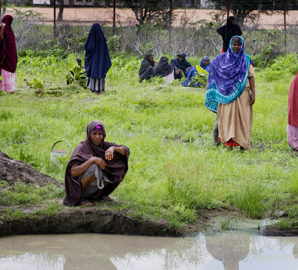
Once known as a refugee-friendly nation, Kenya is becoming more resistant to taking in people who have been forced to flee their homes. That means added challenges for the nonprofit Heshima and the refugee girls it supports, says executive director Alisa Roadcup.

Throughout the conflict in DRC, children have been abducted and made to serve as soldiers. While most are male, it is estimated over a third are female, used mainly as domestic and sexual servants, but sometimes as fighters. Now an NGO has released a report showing that many of the girls weren’t enlisted by force.


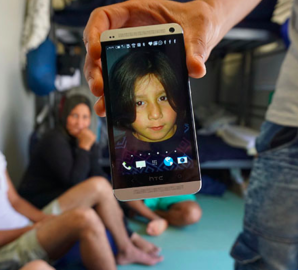
Here was yet another family flung across the sea from Syria sitting in an air-conditioned, yet still stuffy, container that is their temporary home on the island of Samos in Greece. With so many of them having made it to the country together, the Al-Ghateb family stood out from the hundreds of single men and mothers with children at the camp.

“My friend, my friend!” Two little Syrian girls come running toward me as they see the camera around my neck. These two words are part of their limited English vocabulary, a language they are being taught in school at the Vathi refugee center—known as a “hot spot”—on the island of Samos in Greece.


Dirty white gates fronted the detention center on the Italian island of Lampedusa, a tiny speck between Sicily and Tunisia, where 71 women were being held. Beyond the bars, I could just make out laundry hanging from the building in which they were housed—maybe 100 yards away—a yellow scarf, a hot-pink piece of cloth.