








Maya Contreras, MA
Media Experience
DAME Magazine
Pronouns
She/HerAvailable for Interviews In
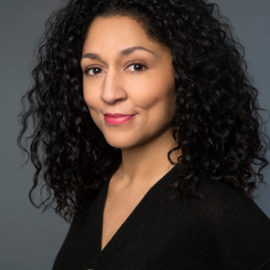
Maya Contreras is a writer and political narrative analyst. In her research and analytical work she examines the creation of political narratives and how they are deployed to shape public opinion. Maya draws on her background in storytelling, comparative religion, and public policy to trace the financial investments in political narratives from their origins to their modern use.
In her forthcoming book, The Language of Theft, Contreras explores how elites have used narratives to coerce the consent of the public in order to protect the elites' concentrated wealth and corporate consolidation. Maya’s research pinpoints recurring narratives and strategies to persuade people to support policies that undermine the public’s economic dignity and civic participation.
Contreras has lectured nationally on public policy and narrative creation. She’s led communication and narrative clinics for members of Congress, congressional staff, journalists, and media professionals. She has been an invited lecturer at the Brennan Center for Justice, NYU, the University of San Francisco School of Law, Clark University, and the Pratt Institute.
In addition to political narratives, Contreras built a career as a writer for film, theatre, and journalism. Maya is a fourth-generation artist and educator, her plays were official selections of the New York Fringe Festival, ECC’s 24-hour plays, and The Future is Female Festival. She has contributed writing for and co-hosted PBS’s television show, Brewed In New York, and the digital series, Table For Two. Contreras has also served as editor-in-chief for an arts and politics magazine, and written for national publications. Maya’s artistic background informs her research into the narratives that shape American politics and culture.
Maya Contreras earned a M.A. in Arts & Public Policy from New York University, and a B.A. in Comparative Religion from Florida State University.
Sub-specialties: Political Narratives, Language and Power, Political Communication, Narrative Analysis, Political Persuasion, Public Opinion, Propaganda and Ideology, American Political History, Race and Politics, Democratic Institutions, Political Messaging, Political Communication, Media and Politics, Democracy and Voting Rights, American Politics

-
The Language of Theft
[April 20, 2027] -
Yes, Democrats Can Take Control of the Conversation
Dame Magazine [March 4, 2025] -
Democrats’ Policies Help Americans. The Right Wing Echo-Chamber Drowned Them Out
Dame Magazine [November 20, 2024] -
We Are So Ready to Elect Kamala Harris
Dame Magazine [July 25, 2024] -
What Media Owes Us
Dame Magazine [February 16, 2023] -
What Voters Need from Democrats
Dame Magazine [July 19, 2022] -
US presidential election : "A lot of this country still has racial resentment"
France24 [July 11, 2020] -
Everything You Need to Know About Voting
DAME Magazine [August 12, 2020] -
It’s Time to Dismantle the Media Conglomerate
DAME Magazine [June 17, 2020] -
Did Legacy Media Kill Kamala’s Campaign?
DAME Magazine [December 4, 2019] -
Suppressed: The Fight to Vote — New York City Screening
Lecture and panel moderator at Brennan Center for Justice [November 12, 2019] -
Women and New Media: Representation and Inclusion
Lecture at Clark University [October 17, 2019] -
Voter Suppression and Disenfranchisement: The language of theft
Lecture at Clark University [October 17, 2019] -
Democracy Shrouded In Lies Isn’t Democracy
DAME Magazine [August 21, 2019]