















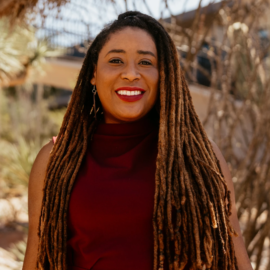
Jilisa Renee Milton, JD, MSW
Media Experience
Pronouns
She/HerAvailable for Interviews In
Jilisa Milton is the executive director of GASP (Greater Birmingham Alliance to Stop Pollution), where she leads initiatives to address pollution and promote environmental justice throughout Birmingham and Alabama. Milton’s connection to this work is deeply personal: she grew up in Birmingham in a family of Black steelworkers and domestic workers in a city that has historically placed Black and working-class communities near industrial pollution. Known as “The Magic City” and “Steel City,” Birmingham rose to prominence as a major steel production center and “company town” shaped by racialized planning and policies, which often neglected the health and safety of its Black residents. This legacy of environmental injustice has inspired Milton’s work to secure a safer and healthier future for marginalized communities.
Raised by her grandparents, Milton moved to Birmingham from New York City during the “Wars on Drugs and Poverty” — policies that disproportionately harmed communities of color. She went on to earn her bachelor’s degree in social work from the University of Alabama and became the first person to graduate from its JD/MSW joint degree program. Her leadership and advocacy have been further supported through fellowships and opportunities with the William J. Fulbright Program, Movement for Black Lives, Equal Justice Works, and the Center for Budget & Policy Priorities.
Milton also serves as an adjunct professor at Tuskegee University School of Social Work, contributing to the development of future leaders in social justice. Beyond her role at GASP, she is a leader in social justice as the Southern Regional Representative and former Vice President of the National Lawyers Guild (NLG). A founder of the Birmingham Chapter of Black Lives Matter and survivor of police violence, Milton has also contributed to the creation of grassroots organizations like Yellowhammer Fund, a reproductive justice organization, and S.W.E.E.T Alabama, focused on equitable energy and environmental sustainability.
Milton has spoken and been interviewed across the U.S. and internationally, including in Indonesia, Mexico, and the United Kingdom. Through her work at GASP and her teaching role, she continues to advocate for transformative change and uplift Birmingham’s communities, linking local history and racial justice to environmental and social equity.
Sub-specialties:
Criminal Justice Reform, Climate Justice, Environmental Justice, Policing, Intersectionality, Social Justice Policy, Police Reform, Abolition, Defund Police, Divest-Invest, Black Lives Matter, Restorative Justice

- Activism and advocacy
- Criminal justice
- Disability
- Entrepreneurship
- Environment
- Feminism
- Hate crimes
- Health
- History
- Human rights
- Humanitarian
- International
- Intersectionality
- Law
- Mental health
- Online harassment and Free speech
- Politics
- Pop culture
- Poverty
- Public safety
- Race and ethnicity
- Reproductive health and justice
- Social justice
- Women
- Women's empowerment
- Women's issues
- Women's leadership
- Work-life balance
- Youth
-
Abortion and the Politicization of Black Women’s Bodies
Bloomberg Law [February 1, 2022] -
Criminalization of Protest in the Fight for Racial Justice
Bloomberg Law [December 7, 2021] -
Justice for Ahmaud Arbery: Jury Selection and What Is ‘Reasonable’
Bloomberg Law [November 12, 2021] -
‘Know Justice, Know Peace’: BLM’s Fight Against Racial Injustice from Birmingham
Birmingham Times [July 9, 2020]