













Dr. Kathleen R. Bogart, PhD
Media Experience
Time
The Conversation
Financial Times
Inside Higher Ed
Psychology Today
NPR
MedicineNet
US News and World Report
Disability Scoop
Pittsburgh Post-Gazette
Pronouns
She/HerAvailable for Interviews In
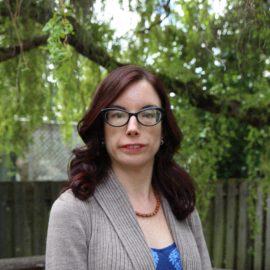
Kathleen Bogart, Ph.D., is an Associate Professor of Psychology at Oregon State University. She earned her Ph.D. in social psychology from Tufts University in 2012. As a person with a disability, she is passionate about researching, educating, and writing about ableism, or disability prejudice. Her research focuses on the psychosocial implications of living with disability, rare diseases, or facial differences such as Moebius syndrome. Dr. Bogart was awarded the Social Personality and Health Network Diversity in Research Award and was named "Professor of the Term" by the Panhellenic Executive Council of OSU. An advocate for people with disabilities, she has served on the American Psychological Association Committee on Disability Issues in Psychology, the Rehabilitation Psychology editorial board, and the Moebius Syndrome Foundation Scientific Advisory Board.
In 2019, she co-edited the Journal of Social Issues special issue on Ableism, and she is the Quality of Life Section Editor of Orphanet Journal of Rare Diseases and an Editorial Board member of Rehabilitation Psychology. Her work has been featured in the New York Times, Time, The Conversation, Financial Times, and Inside Higher Ed. She was a 2021 Public Voices Fellow with the OpEd Project. Dr. Bogart speaks to international academic, general, and stakeholder audiences about disability awareness, disability as diversity, and facial paralysis, and she blogs about these topics for Psychology Today.

-
Disability is Diversity
Psychology Today [2021] -
The Psychology of Disability and Communication
TEDx University of Washington [2021] -
Come out disabled and proud, even if you have a non-stereotypical disability
Harvard Social Impact Review [May 18, 2021] -
Post-lockdown working poses challenges for people with disfigurements
Financial Times [July 13, 2020] -
Many can suffer facial paralysis – and its emotional toll
US News and World Report [February 4, 2020] -
‘Our lives are at stake.’ How Donald Trump inadvertently sparked a new disability rights movement
Time [February 26, 2018] -
Facial expressions are key to first impressions: What does that mean for people with facial paralysis?
The Conversation [May 26, 2016] -
College psychology classes often overlook disabilities
Disability Scoop [March 22, 2016] -
Study: Disabilities underrepresented in college psychology classes
Inside Higher Ed [February 24, 2016] -
Seeking emotional clues without facial cues
New York Times [April 6, 2010]