
















WMC News & Features
The Left's Love for the Feisty Nun
The author, former president of Catholics for Choice, questions the wisdom of progressives who glorify "brave" nuns under Vatican attack.

WMC News & Features
Nuns and Virgins
With the republication of her novel set in the 1950s, Caryl Rivers considers the nuns who taught her and those who are still today the heart of the Catholic Church.

WMC News & Features
Nora Ephron—An Appreciation
Author M. G. Lord knew Nora Ephron socially, but appreciated her most through Ephron's essays. She writes about why they've had only the best influence on her own writing.

WMC News & Features
"Having it All?"—The Wrong Question for Most Women
As it has done at least once a decade for the past 40 years, the media seems intent on pitting women against each other in a "Having it All" debate about work inside and outside the home. Author and organizer Ellen Bravo explains why the discussion defies reality.

WMC News & Features
Ms. Is Celebrated in the City of its Birth
Four decades after its birth as the nation's first feminist mass-market magazine, Ms. was honored this week by the New York City Council. Shelby Knox writes of its continuing advocacy.

WMC News & Features
Nuns Mad As Hell
As a group of nuns plans to crisscross the country to highlight their work with the poor and powerless, Adele M. Stan explains why we may be witnessing a catalyzing moment in U.S. Catholic history.
WMC News & Features
Misogynistic Ads and the Oxygen of Publicity
Retro-sexist advertising may be presented as ironic, but it features the same, familiar images feminists rallied against decades ago, argues the author. What to do?

WMC News & Features
A Mother's Day Conundrum
Psychologist Paula Caplan describes the complicated balancing act involved in honoring her mother while caring for her.
WMC News & Features
My Mom and the Bearded Lady
The author's mother has given her an early exposure to a diverse collection of women, which serves her well as a writer and strategic activist.

WMC News & Features
May Day with Occupy Oakland
The author describes the Occupy movement's action in Oakland last week, in light of a very different mood in the city that greeted the general strike called six months ago.

WMC News & Features
Why Bad Sex Is Good—On HBO's "Girls"
WMC's Madeleine Gyory argues that the new HBO show makes room for realistic complications of forging sexual relationships.
WMC News & Features
Young Feminists Go Live to Protect Women's Reproductive Rights
Young feminists, whose presence in the current War on Women plays out largely online, plan to emerge from the virtual world with rallies in Nashville and other state capitals April 28.

WMC News & Features
Young Women's Caucus—A Promising Sign at UN Commission Meeting
While the recent UN Status of Women Commission sessions failed to reach consensus on recommendations for rural women, young women moved forward, impressing the author with their leadership potential.
WMC News & Features
Breaking in Two—Exploring Images of Motherhood
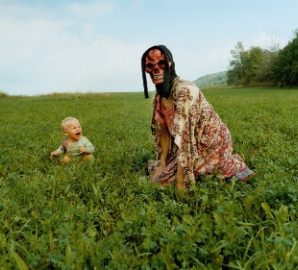
Carrying the subtitle, "A Provocative Vision of Motherhood," this group show in Santa Monica, California, explores the dual roles of artist and mother.

WMC News & Features
Tunisia's Women—Defying the Odds
The author, secretary-general of Parliamentarians for Global Action, writes that Tunisia is finding its own way while Islamist movements gain power in the region.

WMC News & Features
Katniss and Bella—Getting to the Heart of the Matter
The author, a student at the University of Nebraska-Lincoln, argues that the distance between the teen heroes in "The Twilight Saga" and "The Hunger Games Trilogy" may not be as great as it seems.

WMC News & Features
Lewd, Hateful Language Should Have No Place in Campus Debate
An anticipated commencement address set off a rhetorical firestorm that sickened the author, a Barnard undergrad who calls for action by her campus community.

WMC News & Features
Much to Celebrate
Today is International Women's Day. Christine Ahn and the Global Fund for Women mark the occasion by recalling substantial wins for women in 2011.
WMC News & Features
A Feminist Film Festival With a Different Take
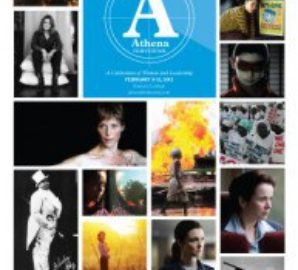
The Athena Film Festival, opening in its second year this week at Barnard College, is designed to advance a national conversation on women and leadership, as its cofounder Melissa Silverstein explains.

WMC News & Features
January 03, 2012 | Robin Morgan |
Economy,
Feminism,
International,
Robin Morgan,
Violence against women
Occupying the Occupy Movement
An Occupy movement for 2012 could gain strength and staying-power with strategies suggested by an emerging feminist critique.

WMC News & Features
OWS—Where Does Feminism Fit?
As the Occupy Wall Street movement expands, women are working to make sure feminist issues are front and center. Here, the co-author of the new website Occupy Patriarchy outlines what it will take to succeed.

WMC News & Features
Cornered in the Corner Office
Recent media coverage propels sexist stereotypes of women lawyers. Here, the author calls for a deeper conversation of the study that fueled bad press.

WMC News & Features
Finding Home: Anita Hill 20 Years Later
The author, who wasn't around to experience the outrage that women felt at senators' reception of Anita Hill testifying at the Clarence Thomas hearings two decades ago, writes of some epiphanies of her own.
WMC News & Features
Our Bodies Ourselves at Forty
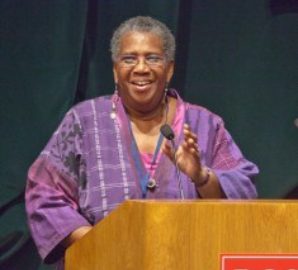
OBOS celebrates its 40th birthday this year, and members of what is now a worldwide community gathered in Boston to discuss the book's huge impact for women globally.
WMC News & Features
"Femicide"—The Power of a Name
Sociologist Diana Russell has organized for decades to end violence against women. Here she argues that labeling the most extreme form of such violence is essential to combating it.