
















Anti-choice legislators have been quietly using insurance regulations to restrict abortion access.

Adding to a long string of accusations stretching back decades, yet another woman has come forward with claims against R&B singer R. Kelly, alleging that he coerced her into sex, mentally and physically abused her, and deliberately infected her with herpes.

When we talk about increasing and diversifying female representation in Hollywood, it seems it is women who feel the most pressure, who feel the most responsible, to counterbalance this misrepresentation by giving voices to a wide range of characters of different colors, ages, sexualities, and backgrounds.

The voracious-but-still-skinny-woman trope of a character rails against unrealistic body standards and eats tons of high-calorie foods, but somehow weighs very little herself.
Robin on Jerusalem's US Embassy, primary wins, & a national alert on chemically tainted water. Guests: Elaine Luria, Naval commander, mermaid maker, Virginia Congressional candidate; Maria Ressa, crusading journalist under attack in the Philippines.

On Monday, Connecticut Governor Dannel Malloy signed a bill into law that codifies existing statues and practices designed to ensure fair treatment of women and trans people incarcerated by the state’s Department of Corrections.
Uganda has lifted a ban on its citizens going to Saudi Arabia and Jordan as domestic workers. But human rights groups say abuse is still rife.
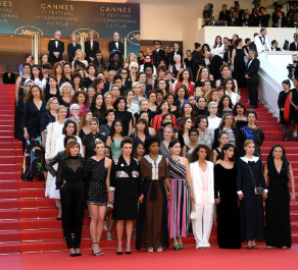
As Cannes promises more inclusion, a new study finds that women continue to be underrepresented at film festivals.

In early May, Kim Kardashian West made headlines for her attempts to ask White House officials to advocate for a presidential pardon for 62-year-old Alice Marie Johnson. While this case is certainly worthy of attention, her advocacy generally overlooks the fundamental problems of racism and prosecutorial discretion within the criminal justice system.

Monáe’s new album navigates the myriad emotions involved in being socially deviant and outcast for that deviance.

The new lynching memorial and museum in Montgomery, Alabama, model a powerfully inclusive approach to history.

Prout has been an activist and advocate ever since she was sexually assaulted by a student at the elite prep school St. Paul’s in 2014. She has since launched the hashtag and movement #IHaveTheRightTo. This month, Prout published a memoir: I Have The Right To: A High School Survivor’s Story of Sexual Assault, Justice, and Hope.
Robin on Cohen, Giuliani, Schneiderman, Spain's "wolf pack," Congress' chaplain, and our 620 million-year-old genes. Guest: actor/director Christine Lahti on sex, power, and aging in Hollywood, and her book, "True Stories from an Unreliable Witness."

Early Monday morning, six armed men robbed a Tijuana shelter where transgender women were staying. On May 8, the shelter was set on fire. Advocates voiced concern about the harassment of the trans women at the shelter and attributed this week’s violence to prejudice.

The National Bail Out Movement is shining a light on the injustices of the bail system, while giving help to women who are often kept in jail for minor offenses.

Despite the peace agreement between the Colombian government and the Revolutionary Armed Forces of Colombia People’s Army being the first in the world to acknowledge the different realities and disadvantages women and the LGBTQ population face, advocates say deeply entrenched misogyny is stalling progress.

The day after his “Saturday Night Live” performance, Childish Gambino released a new song titled “This Is America.” The complicated imagery of the song’s accompanying music video powerfully highlights the provocative symbolism of his lyrics, which make political statements about the role of blackness in America.

“Violated! Women in Holocaust and Genocide,” on view until May 12, explores violence and degradation suffered by women worldwide through works made by victims, their relatives, witnesses, and others.

On April 26, 2018, the provincial court of Navarra, Spain, ruled that five men had not raped a Spanish woman, but sexually abused her. Under Spanish law, sexual abuse is a crime that does not use intimidation or violence, and therefore warrants a lesser sentence than does rape.

The West Virginia strike seems to have started a movement: Teachers in other states such as Arizona, Colorado, and, now, Oklahoma have followed suit and organized their own walkout movements.
When I first began educating myself about feminism, I was warned that I would soon start seeing sexism and misogyny all around me. Those who warned me were right.

In late March, New York Gov. Andrew Cuomo signed legislation that closes a legal loophole in an attempt to ensure domestic abusers are required to surrender all firearms, not just handguns.
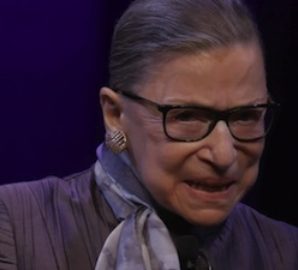
A new film documents the extraordinary life of the Supreme Court justice who has become a cultural icon.

In contrast to the hypersexualized attire donned by the majority of female characters in fantasy/action movies, Ruth E. Carter’s designs are "feminine, masculine, beautiful, and strong," and challenge the conception that femininity and strength are mutually exclusive.
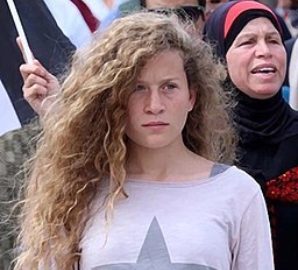
Ahed Tamimi is more than an emblem of Palestinian unity or a symbol of the resistance. She is an inspiring figure for all young feminists to look up to.
- All Categories
- Arts and culture
- Body image and body standards
- Disability
- Economy
- Education
- Environment
- Feminism
- Free Speech
- Gender-based violence
- Girls
- Gloria Steinem
- Health
- Immigration
- International
- Jane Fonda
- LGBTQIA
- Media
- Misogyny
- Online harassment
- Politics
- Race/Ethnicity
- Religion
- Robin Morgan
- Science and tech
- Sports
- Violence against women
- WMC Loreen Arbus Journalism Program