
















A New York Times article examined how Democratic presidential candidate Sen. Amy Klobuchar has treated her staff members. Nichola Gutgold asks: Will other candidates be given similar scrutiny?

As Venezuela spirals from rampant hyperinflation and violent political clashes, a health crisis has stricken the South American country, it’s the most vulnerable migrants—children, babies and pregnant women—who are being hit the hardest.

The practice of paying a bride price occurs in multiple African countries, although exact traditions and levels of legality vary. While some advocates want the practice to be eradicated, many Zimbabweans are still in favor of upholding the practice. Despite popular opinion, there is still very real damage done to women as a result of it.
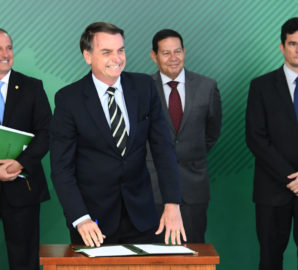
In January 2019, Brazil's newly-elected president Jair Bolsonaro signed a decree relaxing restrictions on gun ownership, a move that could endanger women further in a country ranked first in the world for firearm mortality and fifth for femicides.
Robin on national emergencies, Cardinal McCarrick, "embryo adoption," and why the North Pole is moving, plus Part 3 of "Women’s Suffrage(s)." Guest: Leta Hong Fincher on her book "Betraying Big Brother: The Feminist Awakening in China."

Nominations are a legitimate indication of who is worthy of not only cultural acknowledgment but a financial investment. This is why it’s crucial to pay attention not only to who is being recognized at the Academy Awards but also to who isn’t.

Camila is the second trans woman reported killed in El Salvador just this month; in fact, she immigrated to the U.S. in the first place because she had received threat. Camila’s murder highlights the deadly impact of American immigration policies on vulnerable populations, especially women and LGTBQ people who migrated to the United States seeking safety.

Thanks to the progress the #MeToo and Times Up movements have made in shining a light on the injustices women in the film industry face, I naively assumed that women would be better represented among this year’s award nominees. I assumed wrong.

This Alabama woman wrote a piece about the late-term abortion she wishes she had. With Donald Trump’s conservative agenda in action, will lawmakers listen to stories like hers?

Even before the media gave these women’s political visions a chance, it has largely narrowed in on evaluating whether these women possess a single quality — one that they seem to care about only when it comes to female candidates: their likability.
Robin on Rosalind Franklin, the Nevada state legislature, and how a "walking fish" could save us all, plus Part 2 of "Women's Suffrage(s)." Guest: biologist and social scientist Dr. Renate Klein on her book, "Surrogacy: A Human Rights Violation."

Agbogbloshie, an e-waste scrapyard in Accra, Ghana’s capital city, is where discarded electronics imported from developed and neighboring African countries go to die. Thousands of women who trade on the contaminated site are at risk due to prolonged exposure to toxic fumes from e-waste.

Rather than follow the longstanding social script that young people should feel shame about their sex lives, Sex Education normalizes the concept of teens asking questions about their bodies and relationships.

It’s not uncommon for Kenyan public schools to have a “no-hair” policy, meaning both girls and boys have to shave off their tresses, policies that are the legacy of colonialism and, as such, still perpetuate racism.

From grandmother to granddaughters, the Yepes women use "conscious rap" to retake their community in Medellín from the image and legacy of Pablo Escobar.

The next generation of feminists are being nurtured in Sierra Leone, and Moiyattu Banya-Keister, a Sierra Leonean educator and feminist, has created a safe space for this to happen: Girls Empowerment Sierra Leone (GESL).
Robin on racism, sexism, and Virginia; Congresswomen wearing white; a mysterious sticky island; Trump’s “executive time;” and why women’s suffrage should be women’s suffrages. Guest: Lisa Borders, President and CEO of Time’s Up! workplace revo

Despite a peace agreement, sexual violence is on the rise in Mali’s conflict. But the International Criminal Court in The Hague is considering an unprecedented case for the prosecution of sexual violence.

On January 23, the New York State legislature passed the Jose Peralta Dream Act. This act is a significant win for immigrant rights in the realm of higher education, as it makes an estimated 146,000 DREAMers, or minors brought to the country by their undocumented parents, who attend New York public schools eligible for scholarships and financial aid that was previously unavailable to them.
Considering that dangerous ideas have already become rampant in our country, we have to be especially conscious of and actively work against the influence of media that spreads fallacies and hate speech.
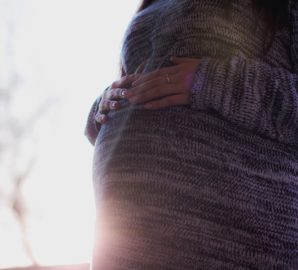
The government still controls mothers, especially those in marginalized populations, by criminalizing their bodies and the choices they make about them.
Robin on climate vs. weather, Queen Elizabeth II and Brexit, negotiations with the Taliban, bias about addressing pain, and bouncing chicken nuggets. Guest: philosopher Dr. Mariana Alessandri on the gender politics of fasting.

“Sex Hurts” is the first episode of “Bodies,” a podcast produced by Allison Behringer that delves into some of the physiological experiences women commonly have but individually find mysterious.

A new study shows that depictions of abortion on TV can dispel myths and destigmatize the experience.

In March 2019, the first private African satellite will be rocketed into space, thanks to a group of school girls based in Cape Town, South Africa.
- All Categories
- Arts and culture
- Body image and body standards
- Disability
- Economy
- Education
- Environment
- Feminism
- Free Speech
- Gender-based violence
- Girls
- Gloria Steinem
- Health
- Immigration
- International
- Jane Fonda
- LGBTQIA
- Media
- Misogyny
- Online harassment
- Politics
- Race/Ethnicity
- Religion
- Robin Morgan
- Science and tech
- Sports
- Violence against women
- WMC Loreen Arbus Journalism Program